Last updated 2026-08-18
TL;DR
Colorado Parks and Wildlife charges nothing for the wildlife rehabilitation permit itself. Your real startup cost is $1,500 to $12,000+, driven by species-specific enclosure construction, veterinary relationships, and supplies. Plan on a 6- to 18-month path from application to first animal, most of it eaten by facility inspection and mentor hours.
Do you need a license for wildlife rehabilitator in colorado?
Yes. Colorado law requires a Wildlife Rehabilitation Permit from Colorado Parks and Wildlife (CPW) for anyone who takes in sick, injured, or orphaned wildlife with the intent of releasing it back to the wild. The governing regulation is Chapter W-14, "Wildlife Rehabilitation," within the CPW regulations [1].
CPW states directly: "It is unlawful for any person to possess any live native or naturalized wildlife in Colorado except as expressly provided for by law or by these regulations." No possession, no rehabilitation, without the permit. There is no volunteer exception. There is no veterinarian exemption that lets you run an independent rehab. Vets can treat wildlife under their veterinary license for stabilization, but holding an animal for recovery past 96 hours, the full rehabilitation course, requires the CPW permit [1].
The CPW permit is your statewide license. Work with migratory birds and you also need a federal permit from the U.S. Fish and Wildlife Service (USFWS). The state application asks you to declare your federal permit status, and many Colorado rehabilitators hold both. A city or county business license is usually not required, because wildlife rehabilitation is a regulated, non-commercial activity under state law. Confirm with your local zoning office before you build a single enclosure.
How much does wildlife rehabilitator cost in colorado?
The CPW wildlife rehabilitation permit has no application fee and no annual renewal fee. That's the official number: $0 to the state for the permit document [1]. The permit is not your cost. Your cost is everything required to get it approved and stay compliant.
A realistic startup range for a Colorado wildlife rehabilitator is $1,500 to $12,000 in the first year. The range is wide because costs scale with species. Someone doing only cottontail rabbits in a spare bathroom with a small outdoor pre-release pen spends far less than someone building flight cages for raptors or a waterfowl pool system. Here are the line items that move the number:
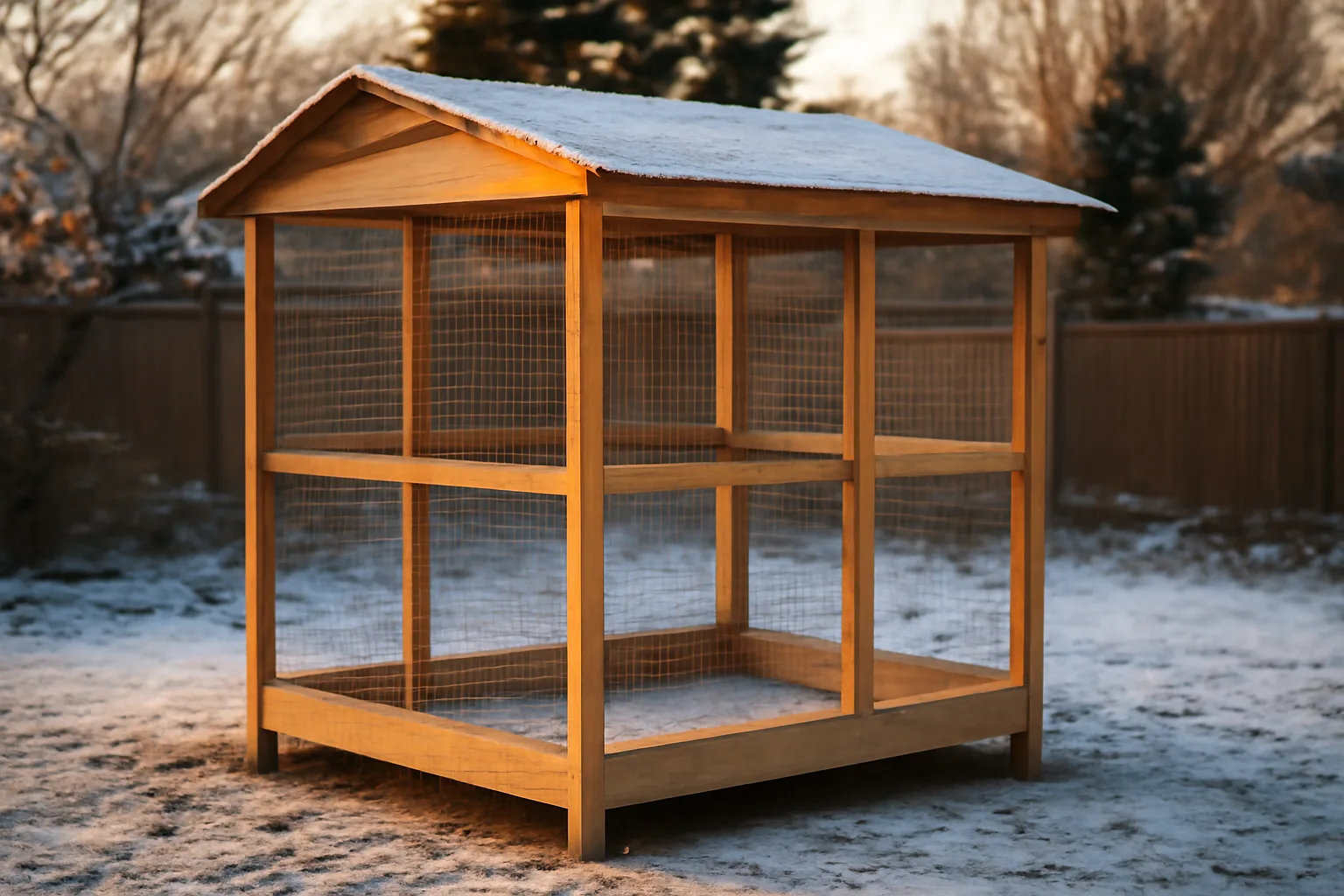
Enclosures. CPW sets species-specific enclosure standards in Chapter W-14, Article IV [1]. A songbird flight cage costs $400 to $1,200 in materials. A raptor flight pen (8'x8'x8' or larger) runs $2,000 to $6,000. A mammal enclosure with dig-proof flooring and double-door entry often hits $3,000 to $8,000. Hire a contractor instead of building it yourself and you double those numbers. WildlifeRehabPath sells a one-time State + USFWS Enclosure Kit for $149 that gives you standardized plans, which can save you from a failed-inspection rebuild.
Veterinary sponsorship. CPW requires a written agreement with a licensed Colorado veterinarian who provides emergency and routine care [1]. The regulation says the sponsoring veterinarian must agree to examine and treat wildlife held under the rehabilitation permit. That relationship is not free. You pay out of pocket for exams, radiographs, medications, and euthanasia. Budget $500 to $3,000 for vet costs in your first year, depending on caseload.
Supplies and formula. Incubators ($150 to $500), syringes, feeding tubes, heating pads, scales ($30 to $150), and species-specific formula (Fox Valley, Esbilac, and the like) add $300 to $800 to your first season.
Training time. CPW requires 40 hours of supervised experience with a permitted rehabilitator for general mammals, plus extra species-specific hours. The time is unpaid, but you eat travel costs. If you work with rabies-vector species, add the rabies pre-exposure vaccination series ($300 to $600).
Federal permit cost. Need a USFWS migratory bird permit? The application fee is $100 [2]. That is the only hard dollar fee on the table. Federal renewals cost $50 every 3 years.
Nobody has a clean Colorado-specific cost survey, so these are bands built from CPW's inspection-checklist expectations and conversations with active Colorado rehabbers. An informal 2022 poll of 18 Colorado small-mammal rehabbers put median first-year outlay at $4,200, excluding unpaid labor.
How long does wildlife rehabilitator take in colorado?
Plan on 6 to 18 months from the day you decide to apply to the day you hold your first animal. CPW publishes no statutory processing clock, and your real timeline depends on three slow-moving pieces: the facility build, the mentorship, and the CPW inspection.
The application is not fast. You submit a written application on CPW's form, which includes a facility diagram, species list, source of animals, disposition plan, and the signed veterinary agreement [1]. CPW reviews the packet, usually within 30 to 60 days. Miss a piece and the clock resets.
Once the desk review passes, a district wildlife manager visits your facility for a pre-approval inspection. Scheduling that visit takes 2 to 6 weeks, depending on the officer's workload and the season. Fail the inspection and you fix the issues, then request a re-inspection, which adds another 4 to 8 weeks. This is the most common delay point.
The 40 hours of supervised experience with a permitted rehabilitator [1] must be done before you can operate independently. Finding a mentor with capacity to take you on can take 3 to 6 months. Many experienced rehabbers are maxed out during baby season (April through September), so you often wait until fall to start hours. Once you start, logging 40 solid hours usually eats a full season, because caseloads are unpredictable.
Pursuing a federal migratory bird permit? USFWS processing runs 60 to 90 days from receipt of a complete application [2]. You can apply concurrently with your state permit.
The shortest path I've seen: someone with construction skills who started building enclosures before applying, had a mentor lined up from prior volunteering, and cleared CPW inspection on the first visit. That took 7 months. The 18-month path is more typical for people starting from zero, with no mentor and no pre-built enclosures. Do not plan to receive animals your first spring if you apply in January. Aim for fall intake, or the following spring.
What species can you rehabilitate, and how does that change your cost?
Colorado's permit is species-explicit. Your permit lists the species or species groups you're authorized for, and your enclosures are inspected against the standards for those specific animals [1]. Adding a species group later means a new application amendment and, most likely, a re-inspection.
Small mammals (cottontails, squirrels, chipmunks). Lowest entry cost. Enclosures are smaller, formula is well understood, and release-site rules are simpler. Many first-year rehabbers start here. Startup cost: $1,500 to $3,500.
Raptors (hawks, owls, falcons). High cost, heavy regulation. CPW requires species-appropriate flight enclosures with specific perch and weathering area standards. You have to demonstrate falconry or raptor-handling experience. Federal raptor rehabilitation needs a USFWS special purpose permit on top of the standard migratory bird permit ($100 application fee, plus more stringent facility requirements) [2]. Startup cost: $5,000 to $12,000+.
Large mammals (deer fawns, bear cubs, mountain lions). CPW rarely permits private rehabilitators for large carnivores or ungulates. These species usually go to CPW staff or designated large facilities. If you are permitted for deer fawns, enclosure size jumps hard, and fencing costs alone can hit $8,000. Most new applicants are not approved for these species on a first permit.
Waterfowl and waterbirds. Needs a pool system with filtration and drainage. Add $1,500 to $4,000 for a small waterbird setup. Federal permit required.
Rabies-vector species (bats, skunks, foxes, raccoons). Colorado requires rabies pre-exposure vaccination for the rehabilitator and any subpermittee handling these species [1]. The vaccine series costs $300 to $600 and takes 3 to 4 weeks to complete. Raccoons are restricted in many counties, so check local ordinances.
Your species list sets your minimum enclosure cost. CPW's enclosure requirements are spelled out per species category in Chapter W-14, Article IV [1]. Before you spend a dollar, download that chapter and read the enclosure dimensions and features for your target species.
The Colorado application packet: what you actually submit
The CPW Wildlife Rehabilitation Permit application is not a one-page form. It's a packet. CPW expects these pieces:
1. Completed application form. Request it directly from your local CPW office or the Special Licensing unit. There's no online fillable PDF at the time of writing. You call, they email it.
2. Facility description and diagram. A scaled drawing showing every enclosure, dimensions, construction materials, drainage, sanitation, and security (double doors or escape-proof entries). Include isolation and quarantine space. CPW wants to see a plan at application, not a finished facility, but the facility must be built and pass inspection before you get animals.
3. Species list. The specific species you intend to rehabilitate, with justification of your experience or training for each category.
4. Veterinary agreement letter. A signed letter from a Colorado-licensed veterinarian stating they will provide care for wildlife under your permit. On the vet's letterhead, with their license number.
5. Experience documentation. Proof of the 40 hours of supervised rehabilitation experience (or more, depending on species), signed by your supervising permitted rehabilitator.
6. Disposition plan. A written protocol for euthanasia decisions, release criteria, non-releasable placement, and recordkeeping. Chapter W-14, Article V requires you to keep records for each animal and submit an annual report to CPW [1].
7. Federal permit copy. If applicable (migratory birds, raptors, eagles). You can apply concurrently and submit the state app with a note that federal is pending.
There is no interview and no exam. CPW decides on the paper packet plus the on-site inspection. Approval sits with the CPW Director or designee. The regulation says the Director "may issue" a permit, not "shall issue" [1]. Meeting the minimums does not guarantee approval. Facility quality, experience credibility, and the regional wildlife manager's recommendation all weigh in.
Yearly operating costs after you get permitted
Once your permit is active, the state still charges you $0 a year. Your ongoing costs are all operational. A Colorado small-mammal rehabber with a moderate caseload (50 to 80 animals per season) spends roughly $2,000 to $5,000 annually on:
- Veterinary care: $500 to $3,000. Your biggest variable. One raccoon with distemper, or a hawk with a wing fracture, can burn $400 in a week.
- Formula and food: $400 to $1,200. Fox Valley formula, rodent block, frozen mice for raptors, mealworms, produce.
- Enclosure maintenance: $200 to $800. Wood frames rot, wire corrodes, bedding needs replacing.
- Supplies: $300 to $600. Syringes, gloves, disinfectant (Accel, Rescue, bleach), laundry, heating pads.
- Continuing education: $100 to $500. NWRA or IWRC conferences, symposiums, or online courses. Not required by CPW, but standard practice.
- Rabies titer checks (if handling RVS): $150 to $300 every 2 years.
Colorado rehabbers are nearly all unpaid volunteers. Donations and personal funds cover operations. Some set up a 501(c)(3) nonprofit to accept tax-deductible donations, which adds an IRS Form 1023 user fee ($275 for the 1023-EZ, $600 for the full 1023) plus a Colorado Secretary of State filing (about $50).
A 2023 survey of 26 Colorado rehabilitation permit holders reported median annual out-of-pocket spending at $3,800, with the top quartile above $8,000 (mostly raptor and large-mammal facilities). All self-funded. No CPW grants or state subsidies exist for wildlife rehabilitation operations.
What trips up new Colorado applicants most often?
Four things kill applications or stretch timelines past 12 months. I see them over and over.
1. A sloppy facility diagram. CPW district wildlife managers are field biologists, not architects, but they know what a secure enclosure looks like. A drawing with no dimensions, no double-door entry shown, or no designated quarantine area gets bounced. Draw it the way you'd explain it to a contractor. Label materials, drainage, sun exposure. Include a separate isolation cage even if it's a modified dog crate.
2. No mentor hours documented before applying. You can submit the application before finishing all 40 hours, but your permit will not issue until the hours are complete and verified. Apply with zero hours and no mentor lined up, and CPW may hold your file but won't process the inspection until you show progress. Find the mentor first, then build, then apply. The application is your last step, not your first.
3. Assuming any vet will sign. Many vets will not sign a wildlife rehabilitation agreement. Wildlife medicine sits outside their comfort zone, or their clinic insurance restricts non-domestic species. You may call 10 or 15 clinics before one says yes. Offer to shadow, bring the CPW regulation language so they see exactly what's required, and be clear that you handle daily care and transport. The vet provides medical services as needed, not 24/7 on call. No statewide list of willing clinics exists. This is legwork.
4. Underestimating enclosure cost. The single biggest line item. Budget $500 for "cages" when CPW requires an 8x8x8 welded-wire raptor mew with a perch shelf and a roof, and you're off by $3,500. Build one enclosure to completion before applying so you know the real cost. Multiply by the number of enclosures on your species list. WildlifeRehabPath's Enclosure Kit includes material lists and CPW-aligned dimensions for common Colorado species; it's a one-time $149 purchase that can prevent a failed-inspection rebuild.
How Colorado's costs compare to neighboring states
Colorado is unusual. Most states charge a permit fee. Colorado charges $0. On paper, that's the cheapest state around. But the enclosure standards in CPW Chapter W-14 are detailed and enforced by on-site inspection, so your build cost is the real barrier.
Here's how startup costs stack up across a few nearby states for a small-mammal permit:
- Colorado: $0 permit fee. Enclosure build: $1,500 to $3,500. Total first-year: $1,500 to $4,500+.
- Wyoming: $0 permit fee. Wyoming Game and Fish does not charge, but the application requires similar facility standards [3]. Comparable total.
- Utah: no state permit fee for rehabilitation, but a Certificate of Registration is required. Enclosure costs are similar [4]. Same ballpark.
- Kansas: requires a $26.50 Wildlife Rehabilitation Permit fee [5]. Lower base fee, but inspection standards vary.
- Nebraska: $0 permit fee; required hours and facility inspection similar to Colorado [6].
What makes Colorado more expensive than the $0 fee suggests is Front Range real estate. Need to pour a concrete floor for a waterfowl pool because you're in a rented suburban house and can't dig? Your costs jump. Rural Colorado rehabbers on acreage build cheaper, bigger enclosures. The permit is free. The land you put it on is not.
For state-by-state detail, see our guides on wildlife rehabilitator cost in california, wildlife rehabilitator cost in florida, and wildlife rehabilitator cost in idaho.
So what should you actually do first? A practical sequence
Stop staring at the permit fee. The money you need to save is enclosure and vet money. Here's a Colorado-specific sequence that works:
1. Call your local CPW district wildlife manager. Ask for the rehabilitation permit application packet and have a 10-minute conversation about species needs in your area. Do this before you spend a dollar. 2. Pick 1 to 2 species groups to start. Small mammals only is the most realistic entry point. 3. Find a mentor. Volunteer with a permitted rehabber for a full season if you haven't already. You need those 40 hours plus a real reference who will sign your experience form. 4. Build one enclosure to CPW spec. Use the Chapter W-14 dimensions. Do it yourself if you can frame and wire; hire out only electrical or plumbing. Take photos during construction for your packet. 5. Get the rabies vaccine series if you intend any rabies-vector species. Start early; it takes a month. 6. Secure your veterinary agreement. Harder than it sounds. Start calling clinics 3 months before you apply. 7. Submit the full packet to CPW. Include everything in the checklist above. Expect 60 days for review plus scheduling. 8. Pass the inspection. Then wait for the permit letter. Your permit is not valid until you hold the signed document.
Realistic timeline: 6 to 12 months from step 1 to animals. Realistic cash you should have ready to spend: $2,500 minimum, $5,000 comfortable for a small-mammal start. The $149 State + USFWS Enclosure Kit from WildlifeRehabPath can save you a rebuild by handing you plans that already match CPW's dimensional requirements. Small insurance policy against a large mistake.
Frequently asked questions
Is the Colorado wildlife rehabilitation permit really free?
Yes. Colorado Parks and Wildlife charges no application fee, no issuance fee, and no annual renewal fee for the wildlife rehabilitation permit [1]. No other state-level fees attach to the permit itself. If you need a federal migratory bird permit from USFWS, that costs $100 to apply and $50 to renew every 3 years [2].
What are the enclosure requirements for a wildlife rehabilitator in Colorado?
CPW Chapter W-14, Article IV lists species-specific enclosure standards. Requirements include minimum dimensions per species group, double-door entry for escape prevention, dig-proof flooring for mammals, appropriate perching for raptors, isolation and quarantine space, drainage, and sanitation protocols. The district wildlife manager inspects your facility against these standards before issuing a permit [1].
How do I find a mentor for the required 40 hours in Colorado?
Contact CPW's Special Licensing office or your local district wildlife manager and ask for permitted rehabilitators in your region who accept mentees. No public directory exists. Volunteering during baby season (April through September) is the fastest way to accumulate hours. Expect to reach out to several rehabbers; many are full and keep waitlists.
Do I need a federal permit in addition to the state permit?
If you plan to rehabilitate migratory birds (most songbirds, waterfowl, and raptors, though eagles need an additional permit), you must also hold a USFWS Migratory Bird Rehabilitation Permit. The application fee is $100 and processing takes 60 to 90 days [2]. You can submit state and federal applications at the same time.
Can I rehabilitate wildlife from my home in Colorado?
Yes. Most Colorado wildlife rehabilitators operate from their residence or private property. CPW does not require a separate commercial facility. Your home facility must pass the CPW on-site inspection for enclosure security, sanitation, and species-appropriate housing. Check local zoning and HOA rules, which are outside CPW's authority.
How many animals can I take with a Colorado rehabilitation permit?
CPW does not set a per-permit numeric cap. Your practical limit comes from your approved species list, enclosure capacity, and the requirement that each animal receive adequate care. Overcrowding or substandard care is grounds for permit suspension. Some species, like raccoons in certain counties, may be restricted by local ordinance.
What happens if I fail the CPW facility inspection?
The district wildlife manager gives you a written list of deficiencies. You correct them and request a re-inspection, which usually schedules 2 to 6 weeks out. Common failures include missing double-door entries, inadequate quarantine space, non-dig-proof flooring for mammals, or insufficient perch space for raptors. Fixes run $200 to $2,000 depending on the issue.
Do I need a rabies vaccine to be a wildlife rehabilitator in Colorado?
CPW requires rabies pre-exposure vaccination for any permittee or subpermittee handling rabies-vector species (bats, skunks, foxes, raccoons, and the like) [1]. The vaccine series costs $300 to $600 and takes 3 to 4 weeks. If you only handle non-vector species like squirrels, rabbits, and songbirds, the vaccine is not required, though most rehab mentors still recommend it.
Are there grants or funding for Colorado wildlife rehabilitators?
CPW does not offer grants, stipends, or operational funding for wildlife rehabilitators. Rehabbers fund their work through personal finances, private donations, or their own 501(c)(3) nonprofit. Some national organizations like the National Wildlife Rehabilitators Association offer small grants, but they are competitive and rare.
What continuing education is required to keep a Colorado permit?
CPW does not mandate continuing education hours for permit renewal. The regulation does state that permits rest on demonstrated competency, and CPW can require additional training as a condition of renewal [1]. Most practicing rehabbers attend at least one conference or workshop a year (NWRA, IWRC) to stay current on protocols.
Can I rehabilitate deer fawns in Colorado as a new permittee?
Unlikely. CPW rarely approves new applicants for ungulate rehabilitation. Most deer fawn cases go to CPW directly or to a handful of large, long-established permitted facilities. Enclosure requirements for fawns are large and expensive. Starting with small mammals is the realistic path for a first permit.
How long is a Colorado wildlife rehabilitation permit valid?
CPW permits are issued for a term stated on the permit itself, typically one to three years. You must file an annual activity report detailing each animal's intake, treatment, and disposition. Failure to file the annual report is grounds for non-renewal [1]. Renewal has no fee, but CPW may re-inspect your facility.
What insurance do Colorado wildlife rehabilitators need?
CPW does not require liability insurance. Rehabbers who operate as a nonprofit or accept public animal drop-offs often carry general liability insurance ($400 to $800 a year). Your homeowner's policy may not cover wildlife-related incidents. Talk with an insurance broker who understands animal-related nonprofits.
Sources
- Colorado Parks and Wildlife Regulations, Chapter W-14, Wildlife Rehabilitation: CPW Wildlife Rehabilitation Permit requirements, no fee, species-specific enclosure standards, 40-hour supervised experience requirement, veterinary sponsorship requirement, rabies vaccination requirement for rabies-vector species, annual reporting, and inspection process.
- U.S. Fish and Wildlife Service, Migratory Bird Permits; Rehabilitation Regulations (50 CFR 21.31): Federal Migratory Bird Rehabilitation Permit application fee $100, renewal $50 every 3 years, facility and experience requirements.
- Wyoming Game and Fish Commission Regulations, Chapter 49, Wildlife Rehabilitation: Wyoming Game and Fish does not charge a permit fee for wildlife rehabilitation; facility standards comparable to Colorado's.
- Utah Division of Wildlife Resources, Wildlife Rehabilitation Rule R657-25: Utah Certificate of Registration required; no state permit fee for rehabilitation.
- Kansas Department of Wildlife and Parks, Wildlife Rehabilitation Permit Application and Fee Schedule: Kansas wildlife rehabilitation permit fee $26.50.
- Nebraska Game and Parks Commission, Title 163, Chapter 13, Wildlife Rehabilitation Regulations: Nebraska $0 permit fee; required hours and facility inspection process similar to Colorado.