Last updated 2026-08-18
TL;DR
In Arizona, you must hold a state Wildlife Rehabilitation License ($25 non-refundable application fee) and a federal Migratory Bird Permit ($100) to care for wildlife. Required training through IWRC costs $375, $425. Initial enclosures range from $500, $2,000. All in, expect $1,400, $1,800 to launch, with the process taking 6 to 12 months from training to permit issuance.
Do you need a license to be a wildlife rehabilitator in Arizona?
Yes. Arizona Game and Fish Department (AZGFD) requires a Wildlife Rehabilitation License before you can possess, transport, or provide care for any native wildlife [1]. Without it, even temporary care of an injured bird could result in fines. The license covers mammals, birds (except migratory birds, which need a separate federal permit), and reptiles, but not game animals or federally protected species like eagles without extra authorizations.
Most rehabilitators also need a federal Migratory Bird Rehabilitation Permit from the U.S. Fish and Wildlife Service (USFWS). That permit costs $100 and is mandatory if you will ever care for any migratory bird, songbird, or waterfowl [2][7]. You apply for it after obtaining your state license [2]. The state application itself says, “A $25.00 non-refundable application fee must accompany this application” [1].
How much does a wildlife rehabilitator license cost in Arizona?
The state license fee is a flat $25, paid when you submit the Wildlife Rehabilitation License Application to AZGFD [1]. But that is just the entry ticket. The real startup costs build from there.
For anyone handling migratory birds, the USFWS permit adds $100. Training through the International Wildlife Rehabilitation Council (IWRC) is effectively mandatory. The IWRC Wildlife Rehabilitation Basic Skills Course costs $375 for members and $425 for non-members [3]. If you plan to work with rabies vector species (bats, skunks, foxes), you must also show proof of pre-exposure rabies vaccination, which runs $300, $600.
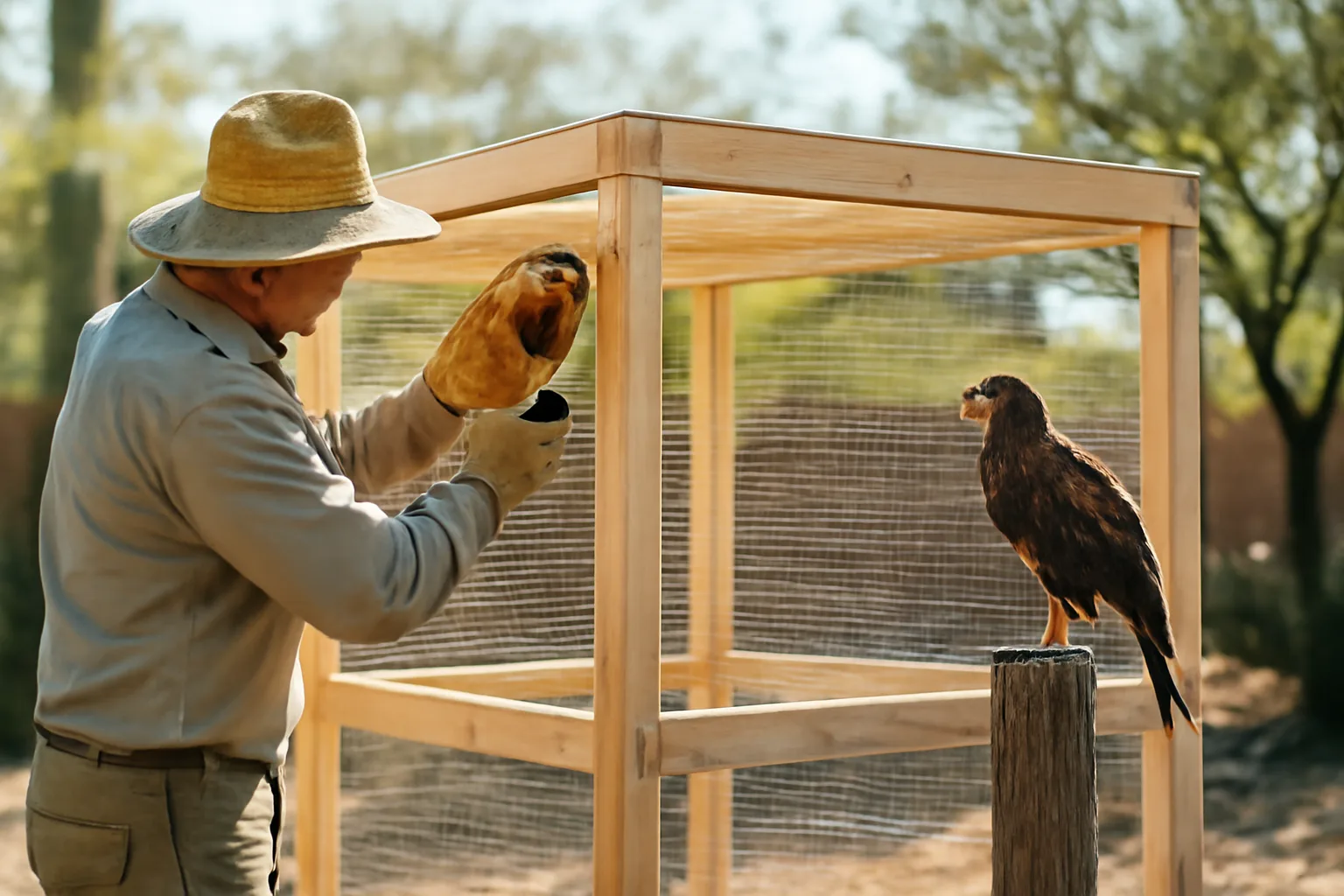
Enclosures are the biggest variable. Arizona’s rules require species-appropriate, secure primary enclosures [6]. A basic outdoor flight cage for a raptor costs $800, $2,000 in materials. Small mammal housing typically costs $500, $1,000. These ranges come from the National Wildlife Rehabilitators Association’s start-up guidance [4]. So a new Arizona rehabilitator focusing on songbirds and small mammals can get everything in place for $1,400, $1,800, not counting ongoing food and veterinary care.
| Item | Cost |
|---|---|
| AZ Wildlife Rehabilitation License (application fee) | $25 |
| USFWS Migratory Bird Rehabilitation Permit | $100 |
| IWRC Basic Skills Course (non-member price) | $425 |
| Initial small mammal enclosure materials | $500, $1,000 |
| Initial raptor flight cage materials | $800, $2,000 |
| Rabies pre-exposure vaccination (if needed) | $300, $600 |
Total startup for a non-raptor, non-rabies-vector program: roughly $1,400, $1,800.
How long does it take to become a wildlife rehabilitator in Arizona?
From zero to permit, expect 6 to 12 months. The timeline breaks into four chunks. First, you complete a state-approved training course. The IWRC basic course is self-paced but typically takes 4 to 8 weeks if you include the hands-on practicum at a licensed facility [3]. Second, you must document at least one year of supervised experience in wildlife rehabilitation, unless your training course already included a supervised hands-on component that AZGFD accepts as equivalent. Most new applicants satisfy the experience requirement through the practicum built into the IWRC course.
Once training is done, you submit your application, documentation, and the $25 fee to AZGFD. The department then schedules a facility inspection. That step can take 30 to 60 days depending on inspector availability and your readiness. After a successful inspection, the license is issued. All told, a motivated person who starts training in January can realistically hold a license by summer. If you need the full year of independent experience first, plan on a 12-month runway.
Arizona’s facility requirements and what they cost
Arizona Administrative Code R12-4-408 requires “primary enclosures must be structurally sound, constructed of materials that can be cleaned and disinfected, and designed to prevent escape” [6]. You’ll need separate indoor quarters and secure outdoor flights for many species. The inspection isn’t pass-fail on a single metric, but the AZGFD field staff will check that caging prevents injury and unauthorized public contact.
You can build your own enclosures or buy commercial aviary panels. Materials for a 10’x10’x8’ songbird flight cage often run $800, $1,200. Raptor mews double that. The National Wildlife Rehabilitators Association notes outdoor enclosures “can range from $500 to $2,000 depending on size and materials” [4]. Sourcing used lumber, donated chain link, and recycled roofing can cut those numbers by half.
Some new Arizona rehabbers cut planning time by using standardized DIY plans. WildlifeRehabPath offers a $149 one-time Enclosure Kit with state-compliant cage plans, materials lists, and layout guides. It’s not required, but having a plan that references Arizona’s housing rules can avoid costly rebuilds after a failed inspection.
Ongoing costs after you get licensed
Once the permit is on the wall, the spending doesn’t stop. Food is the biggest constant drain. A single juvenile raptor can eat $3, $5 worth of frozen mice or chicks per day. Insectivores require live mealworms or crickets, which cost $15, $25 per thousand. Veterinary care is episodic but never cheap: a basic intake exam and fecal test often runs $75, $150, and emergency surgery can hit $1,000 fast. Many rehabbers maintain standing accounts with local wildlife vets who discount fees.
Supplies add up. Gloves, syringes, disinfectants, heating pads, and incubators for orphans are not one-time buys. Expect $100, $200 per month in disposables during baby season. The state license itself has no annual renewal fee, but AZGFD requires you to maintain good standing and may re-inspect every two years. If you hold a USFWS permit, that also has no annual renewal fee; it expires in three years and must be renewed with a new application (no additional fee currently).
Liability insurance is optional but wise. A commercial general liability policy for a small wildlife rehabilitation operation typically costs $500, $800 per year.
How to keep startup costs manageable in Arizona
Start small. Most Arizona home-based rehabbers begin with a single species, Eastern cottontails or non-native starlings, and a single outdoor enclosure. That keeps the initial build under $1,000. Volunteer at an established facility first. The Arizona Humane Society’s Second Chance Wildlife Center and Liberty Wildlife in Phoenix both take volunteers. You’ll log required experience hours while learning exactly what you need before spending money.
Buy used. Watch for aviary panels, chain-link, and hardware cloth on sites like OfferUp and Facebook Marketplace. Many backyard bird keepers disassemble large flights when they move. Reach out to local hardware stores about ordering bulk wire in a shared buy with other rehabbers. And check whether AZGFD offers small grants for wildlife rehabilitation; the department historically has a Wildlife Grant Program that some rehabbers tap for facility upgrades.
Federal permits beyond migratory birds
A standard USFWS Migratory Bird Rehabilitation Permit ($100) covers most birds you’ll encounter [2]. But eagles are different. If you intend to rehabilitate bald or golden eagles, you need a USFWS Eagle Exhibition or Rehabilitation Permit, which carries its own $100 application fee and much stricter facility standards. Endangered species like Mexican gray wolves, California condors, or jaguars require separate USFWS Endangered Species permits with fees that vary; those are rarely issued to individual home-based rehabbers.
If raptor work is part of your plan, factor in extra caging costs. USFWS guidelines for eagle housing often require mews of 100 square feet or more per bird, pushing construction costs upward of $3,000. The good news: Arizona has no additional state fee for eagle rehab beyond the standard license.
How Arizona’s costs compare to other states
Arizona’s $25 license fee is lower than most western states by a wide margin. California charges an initial $50 rehabilitation license fee and often requires a separate facility inspection fee. Colorado’s special license fee is $30. New Mexico’s wildlife rehabilitation permit fee runs $25. While the state fees differ by only $25, $50, federal and training costs are identical nationwide.
| State | License Fee |
|---|---|
| Arizona | $25 |
| California | $50 |
| Colorado | $30 |
The real expense disparity lies in facility requirements, not permit fees. Arizona’s enclosure rules are moderately detailed, close to Colorado’s, while California’s are significantly stricter and more costly to satisfy.
Common mistakes that inflate costs for Arizona rehabbers
Building a big multi-species facility before you have any patients. A 20’ eagle mews costs thousands and sits empty while you wait for calls. Start with one small flight and expand as caseload grows. Underestimating the cost of medical supplies. A bottle of butorphanol for pain control costs $40, $60, and you will need it. Stock a basic formulary early.
Skipping liability insurance. One bite from a raccoon (which you shouldn’t be rehabbing without a rabies endorsement anyway) can lead to a lawsuit that wipes out savings. Zoning is another hidden cost. Some Arizona municipalities treat wildlife rehabilitation as a kennel or boarding facility and require a conditional use permit. That can cost $200, $500 and take months. Check local zoning before you build anything. Finally, not maintaining records. AZGFD requires intake and disposition logs. If your records are a mess, you can lose your license and everything invested.
Next steps to become a licensed wildlife rehabilitator in Arizona
First, download the Wildlife Rehabilitation License Application from AZGFD’s special licenses page [1] and read it top to bottom. Next, enroll in the IWRC basic skills course [3] and schedule the hands-on practicum at a nearby facility. While training, begin drafting your facility design to match Arizona’s enclosure rules [6]. Once your course certificate is in hand, submit the application and fee.
When AZGFD contacts you to schedule the inspection, have your enclosures 100% complete. A partially finished flight cage will not pass. After you get your state license, apply for the USFWS migratory bird permit online at the FWS ePermits portal [2]. The federal review takes about 30 days. If you want a head start on enclosure plans that meet Arizona’s housing standards, WildlifeRehabPath’s $149 Enclosure Kit includes step-by-step instructions and a materials list. It can save a weekend of research and a lot of wasted lumber.
Frequently asked questions
Do you need a license for wildlife rehabilitation in Arizona?
Yes. Arizona Game and Fish Department requires a state Wildlife Rehabilitation License before you can care for any native wildlife. A federal Migratory Bird Permit is also mandatory if you’ll handle any migratory bird. Operating without permits can lead to fines.
How much does a wildlife rehabilitator license cost in Arizona?
The state application fee is $25. A federal Migratory Bird Permit costs $100. Required IWRC training runs $375, $425. Initial enclosures cost $500, $2,000 depending on species. Total startup typically lands around $1,400, $1,800.
How long does it take to become a wildlife rehabilitator in Arizona?
Most new rehabbers go from zero to permit in 6 to 12 months. The training course takes 4 to 8 weeks, and the facility inspection can take 30 to 60 days after application. If an apprenticeship year is needed, plan on 12 months total.
What is the IWRC course and is it required?
The International Wildlife Rehabilitation Council’s Basic Skills Course is the de facto standard for Arizona’s training requirement. It covers medical care, nutrition, and enclosure design, and includes a hands-on practicum. Most AZGFD applicants use it to satisfy the experience prerequisite.
Can I rehabilitate wildlife from my home in Arizona?
Yes, as long as your home meets AZGFD facility standards and local zoning allows it. Many rehabilitators operate from their garages or backyards with separate indoor and outdoor caging. Check municipal zoning for conditional use rules before building.
Is there a fee for facility inspection?
Arizona does not currently charge a separate facility inspection fee for wildlife rehabilitation applicants. The $25 application fee covers the administrative review and the initial inspection, per AZGFD’s fee schedule [1].
Do I need a federal permit for squirrels in Arizona?
Not if you are only rehabilitating tree squirrels, which are game mammals regulated by state license. But if you ever take in a migratory bird, even a dove, you need the federal permit. Most rehabbers get it proactively.
What if I only want to rehab small mammals?
You still need the state Wildlife Rehabilitation License. The $25 fee covers all authorized species categories you list on your application. You can limit your scope to cottontails, squirrels, and other small mammals to keep caging costs down.
Are there grants for Arizona wildlife rehabilitators?
AZGFD’s Wildlife Grant Program sometimes funds habitat and rehabilitation projects. Local private foundations like the Nina Mason Pulliam Charitable Trust also give grants for wildlife care. Competition is stiff, so build a track record first.
Does the AZ license require rabies vaccination?
Only if you intend to rehabilitate rabies vector species (bats, skunks, foxes). You must show proof of pre-exposure rabies vaccination before AZGFD issues an endorsement for those species. The vaccine series costs $300, $600.
Can I volunteer instead of getting a license?
Yes. Facilities like Liberty Wildlife and the Arizona Humane Society accept volunteers. You can handle animals under a licensed rehabilitator’s supervision without needing your own permit. It’s the best way to get experience before committing money.
What happens if I move to Arizona with an out-of-state license?
Arizona does not recognize other states’ wildlife rehabilitation licenses. You must apply for a new Arizona license, meet all requirements, and have your facility inspected. Out-of-state experience may count toward the one-year requirement.
Sources
- Arizona Game and Fish Department, Special Licenses: Wildlife Rehabilitation License: State application fee is $25.00 non-refundable.
- U.S. Fish and Wildlife Service, Migratory Bird Rehabilitation Permit: Federal permit application fee is $100.
- International Wildlife Rehabilitation Council, Wildlife Rehabilitation Basic Skills Course: Course costs $375 for members and $425 for non-members.
- National Wildlife Rehabilitators Association, Starting a Wildlife Rehabilitation Center: Outdoor enclosures can range from $500 to $2,000.
- Arizona Game and Fish Department, How to Become a Wildlife Rehabilitator: Requires completion of an approved training course and at least one year of experience or equivalent.
- Arizona Administrative Code, Title 12, Chapter 4, Article 4 (R12-4-408): Primary enclosures must be structurally sound, cleanable, and escape-proof.
- U.S. Government Publishing Office, Electronic Code of Federal Regulations, Title 50, Part 13, Section 13.11: Migratory bird rehabilitation permit fee is $100.