Last updated 2026-08-18
TL;DR
The Arkansas Game and Fish Commission wildlife rehabilitation permit is free. But meeting the facility, veterinarian, and experience requirements typically costs $500 to over $5,000 in enclosures, supplies, and equipment. Licensing takes 1 to 3 months after you finish 100 hours of hands-on experience. The paper is free. The setup is not.
Do you need a license to rehabilitate wildlife in Arkansas?
Yes. Arkansas law prohibits anyone from possessing native wildlife without a permit, and that includes caring for sick, injured, or orphaned animals. The Arkansas Game and Fish Commission (AGFC) is the only agency that issues wildlife rehabilitation permits in the state [1].
Without a valid AGFC permit, you can’t legally hold a wild animal for more than 24 hours, even with the best intentions. The permit is what separates a legitimate rehabilitator from someone facing fines or confiscation.
The rule is blunt. AGFC code says no person may possess, transport, or propagate wildlife without a valid permit from the Commission [1]. Good intentions are not a defense.
How much does the wildlife rehabilitator permit cost in Arkansas?
The AGFC wildlife rehabilitation permit costs nothing. Zero dollars for the state authorization [1].
If you plan to work with migratory birds (songbirds, raptors, waterfowl), you’ll also need a federal permit from the U.S. Fish and Wildlife Service. The Migratory Bird Rehabilitation Permit (Form 3-200-10a) is free too. Under 50 CFR 21.31, “No fee will be charged for a permit for the rehabilitation of migratory birds” [2][3].
So the paper licenses are not your expense. The real cost is everything the application demands before you can mail it: enclosures, a veterinary relationship, supplies, and the weeks you spend building the facility. That’s where the money goes.
What are the real startup costs for an Arkansas wildlife rehabilitator?
Nobody gets into rehab for free, even when the permit is. Your startup costs land in three hard buckets: enclosures, vet readiness, and basic supplies.
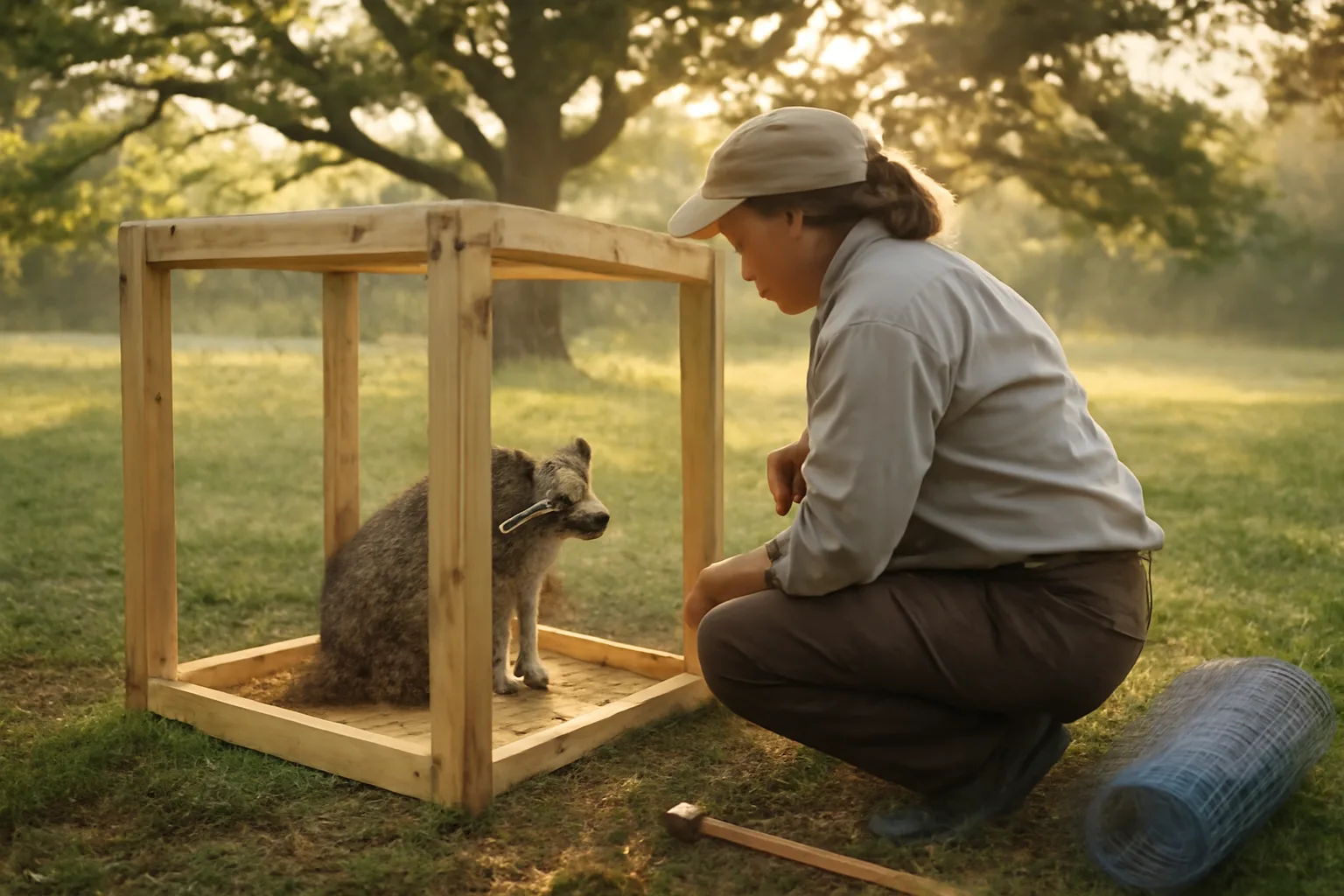
Enclosures. AGFC requires species-appropriate housing that meets its minimum cage sizes and safety standards [1]. A pre-made small mammal cage for a rabbit or squirrel runs $150 to $400. Build your own and lumber, hardware cloth, and fasteners cost $300 to $600 for a unit that passes inspection. A raptor flight cage hits $1,200 to $3,000 in materials alone. You almost always need several: one for intake, one for animals being readied for release, maybe a separate isolation cage. A realistic starter setup for a general rehabilitator runs $1,000 to $5,000, depending on species and whether you buy or build.
Veterinary relationship. AGFC requires a letter from a licensed veterinarian willing to be your primary consultant [1]. Vets rarely charge for the letter, but budget for an initial facility walkthrough ($75 to $200) and for medical supplies (syringes, fluids, bandage material, antibiotics when prescribed). Set aside $200 to $500 for the first year’s vet kit.
Supplies and equipment. Formula, heating pads, carriers, PPE, cleaning agents, a scale, a freezer. These nickel-and-dime you into a hole. A reasonable first-year supply bucket runs $400 to $800.
Want an enclosure starting point? WildlifeRehabPath sells a $149 one-time State + USFWS Enclosure Kit with enclosure plans and dimension specs built around licensing standards. It won’t replace what you build, but it cuts design time and heads off mistakes that fail inspections.
Don’t let the zero price tag fool you. Most first-year rehabilitators in Arkansas spend $2,000 to $5,000 to get fully operational. A frugal, DIY-handy applicant who already owns some supplies might land at $800 to $1,200.
How long does it take to become a wildlife rehabilitator in Arkansas?
Plan on 4 to 12 months. The timeline is front-loaded by one non-negotiable requirement: 100 hours of documented hands-on wildlife rehabilitation experience under a licensed rehabilitator or veterinarian [1].
How fast you rack up those hours is on you. Some people finish in a single busy season (3 to 4 months) if they find a mentor willing to let them assist full-time. Others stretch it across a year around a day job.
Once you have the experience, application review and facility inspection usually take 4 to 8 weeks. AGFC staff handle a small number of permits, and processing speeds up when your paperwork is complete and your enclosure photos show exactly what they want. Some applicants report waiting 10 weeks when corrections were required.
From zero to licensed: figure a minimum of 4 months, realistically 6 to 9, with 12 not unusual if you’re working full-time.
Steps to get your Arkansas wildlife rehabilitation permit
The process is linear. Skip a step and you get a polite denial letter.
1. Get 100 hours of experience. Log every hour, species, and procedure. AGFC wants a signed record from your supervising rehabber or vet [1]. 2. Secure a veterinarian. Your vet has to agree to provide care or advice and write a letter confirming the relationship [1]. 3. Build your facility. Construct cages and a separate quarantine area that meet AGFC’s minimum standards. Take dated photos. 4. Submit the application. Include the completed form, experience log, vet letter, facility photos, and a written protocol for intake, euthanasia, and release. Send it to AGFC’s Wildlife Management Division [1]. 5. Pass inspection. An AGFC biologist visits your site and checks cage dimensions, security from predators, sanitation, and escape-proofing. Fail and you get a fix list plus a reinspection window. 6. Receive your permit. It’s valid for one year and renews annually with a report.
Ongoing costs and compliance after you’re permitted
Renewal is free. Compliance is not.
Annual reporting means logging every animal by species, disposition, and outcome. Budget 4 to 8 hours a year on paperwork [1].
Facility maintenance is an every-year line item. Hardware cloth rusts, wood rots, bleach runs out. Set aside $200 to $500 a year for repairs and cleaning supplies.
Arkansas doesn’t mandate a set number of continuing education hours, but AGFC expects you to stay current. NWRA conferences or state association workshops cost $150 to $400 including travel [5]. Plenty of rehabbers go every other year.
Veterinary costs keep coming, because sick animals keep coming. A single distemper outbreak in raccoons can burn a few hundred dollars in meds and testing. Rehabbers who don’t budget for medical surprises don’t last a second season.
What federal permits do Arkansas wildlife rehabbers need?
If you take in native birds, and most Arkansas rehabbers do, you must hold a federal Migratory Bird Rehabilitation Permit from the U.S. Fish and Wildlife Service [2][3]. It’s free. The application (Form 3-200-10a) goes in by mail, and you’ll supply the same facility details plus a map and photos [2].
Processing takes 30 to 90 days. You can hold state and federal permits at the same time, and one set of enclosures generally satisfies both.
One catch: the federal permit requires you to report banded birds and follow specific euthanasia protocols. Read the permit conditions before you sign, not after.
What are the common mistakes that delay an Arkansas rehab application?
Three mistakes show up again and again, and each one costs you weeks.
- Inadequate enclosures. A pre-fab rabbit hutch isn’t a rehab cage unless you’ve reinforced it with predator-proof wire and added a double-door entry. AGFC biologists look for escape-proofing first. One-inch gaps earn a fail [1].
- Vague experience logs. “Fed squirrels” does not count. Logs need dates, species, approximate animal counts, procedures performed, and the supervising rehabber’s initials. Lazy logs get kicked back.
- No isolation space. You need a separate area for incoming animals, physically apart from your main enclosures, with a dedicated sink or cleaning protocol. A corner of the garage won’t pass unless it’s walled off.
How does Arkansas compare to neighboring states on cost?
Arkansas is one of the few states that charges nothing for the wildlife rehab permit. Alabama requires a $25 annual permit fee. Georgia charges a $50 application fee. Florida has a $50 permit fee plus facility inspection costs.
The hardware isn’t cheaper just because the paper is free. Enclosure and supply costs run nearly identical across the region. What you save on the permit, you spend on lumber and vet bills.
Don’t pick your state based on the license fee. It’s a rounding error in your startup budget.
| State | Permit fee | Renewal | Notes |
|---|---|---|---|
| Arkansas | $0 | $0 | 100-hour experience requirement |
| Alabama | $25 | $25/year | Annual permit |
| Georgia | $50 | Varies | Application fee |
| Florida | $50 | Varies | Plus inspection costs |
Is a wildlife rehab permit worth the cost and effort in Arkansas?
If you’re already rescuing animals and driving them to a rehabber, your own permit cuts out the middle step and lets you serve your immediate area. Releasing a hawk you hand-fed back into the Ouachitas is a real payoff. The money and time are real too.
With the space, a supportive vet, and 10 to 15 hours a week to give, the zero-dollar permit is close to a gift. Just don’t start unless you can accept that the animals’ needs will set your schedule, not the other way around.
If enclosure costs are what’s stopping you, WildlifeRehabPath’s starter kit helps you dodge the most expensive mistakes. One-time cost, and it can save you a rebuild when the inspector shows up.
Frequently asked questions
Do you need a license for wildlife rehabilitation in Arkansas?
Yes. Arkansas law requires a Wildlife Rehabilitation Permit from the Arkansas Game and Fish Commission before you can possess, care for, or release native wildlife. Operating without a permit can lead to fines and animal seizure. The only exception is a brief 24-hour window to transport an animal to a permitted rehabilitator.
How much does the wildlife rehabilitator permit cost in Arkansas?
The AGFC permit is free. No application fee, no annual renewal fee. The federal Migratory Bird Rehabilitation Permit is also free. The real cost comes from building enclosures, stocking supplies, and setting up a veterinary relationship, which typically runs $2,000 to $5,000 in the first year.
Can I rehab wildlife in Arkansas without a permit if it's just temporary?
No. Arkansas law allows a 24-hour possession window to transport an animal to a permitted rehabilitator, but you cannot keep it for care without a permit. Anything past that short transport window requires a licensed rehabber. Holding an animal longer risks fines and confiscation.
How long does it take to get a wildlife rehabilitation license in Arkansas?
After meeting the 100-hour experience requirement, the application and inspection process usually takes 4 to 8 weeks. Total time from start to license is typically 4 to 12 months, driven mostly by how fast you gain the required hands-on hours.
What animals can I rehabilitate with an Arkansas permit?
The standard AGFC permit covers native mammals, reptiles, and amphibians. To rehabilitate migratory birds you also need a federal Migratory Bird Rehabilitation Permit. Some species, like deer and black bears, may require extra state authorization. Check with AGFC before accepting any new species.
Are there free resources to learn about wildlife rehab in Arkansas?
AGFC’s website posts permit application checklists and minimum standards. The National Wildlife Rehabilitators Association offers free factsheets, and many licensed Arkansas rehabbers let volunteers help out to gain the required 100 hours at no cost.
What kind of enclosures does AGFC require?
Enclosures must be species-appropriate, escape-proof, predator-proof, and large enough for the animal to move freely and hide. AGFC lists minimum dimensions in its facility standards. A quarantine area physically separated from the main enclosures is mandatory, not optional.
Does Arkansas require a veterinarian for the rehab permit?
Yes. You must submit a letter from a licensed veterinarian who agrees to be your primary veterinary resource. The vet does not have to be on-site around the clock, but must be available for consultation and emergency care. No vet letter, no permit.
Are there continuing education requirements for Arkansas rehabbers?
Arkansas does not currently require a minimum number of continuing education hours, but AGFC expects you to stay current on best practices. Many rehabbers voluntarily attend workshops or NWRA symposiums, which cost $150 to $400 including travel, to keep their skills sharp.
What happens if my Arkansas rehab application is denied?
You get a written explanation and usually a list of deficiencies. Fix the issues (say, upgrading enclosures) and reapply. There’s no appeal fee, and the process resets when you resubmit. Most denials trace back to incomplete experience logs or substandard facilities.
Can I rehabilitate wildlife in my home in Arkansas?
Yes. Most rehabbers operate from their residence if the facility meets AGFC standards. Check local zoning ordinances first, but the state does not ban home-based rehab as long as the enclosure and quarantine requirements are met.
Is the federal migratory bird permit free in Arkansas?
Yes. Under 50 CFR 21.31, no fee is charged for a migratory bird rehabilitation permit. You apply through USFWS Form 3-200-10a, supply facility details, a map, and photos, and wait 30 to 90 days for processing. It’s separate from your state AGFC permit.
Sources
- Arkansas Game and Fish Commission, Wildlife Rehabilitation Permit: Permit is fee-free; requires 100 hours documented experience, veterinarian letter, facility inspection; annual reporting.
- U.S. Fish and Wildlife Service, Migratory Bird Rehabilitation Permit: No fee for the permit; application via Form 3-200-10a; facility and reporting conditions.
- 50 CFR § 21.31, Rehabilitation permits: “No fee will be charged for a permit for the rehabilitation of migratory birds.”
- Arkansas Game and Fish Commission, Wildlife Rehabilitation Main Page: General definition of wildlife rehabilitation in Arkansas and legal authority overview.
- National Wildlife Rehabilitators Association: Continuing education conferences and factsheets for wildlife rehabilitators.
- U.S. Department of the Interior: Federal oversight of U.S. Fish and Wildlife Service migratory bird permitting.