Last updated 2026-08-18
TL;DR
You need a DEEP wildlife rehabilitator permit to legally care for wild animals in Connecticut. Pass a closed-book exam ($40), log two years and 400 hours under a licensed sponsor, then apply ($40) and pass a facility inspection. DEEP takes about 6 to 8 weeks. Migratory birds also need a $100 federal permit. Plan on at least 2 years from subpermittee to your own license.
Do you need a license to rehabilitate wildlife in Connecticut?
Yes. You cannot possess any wild bird, mammal, reptile, or amphibian for rehabilitation without a permit from DEEP [1]. State law is blunt about it. There is no "good Samaritan" clause that lets an unlicensed person keep an animal, not even overnight, and violations carry fines [1].
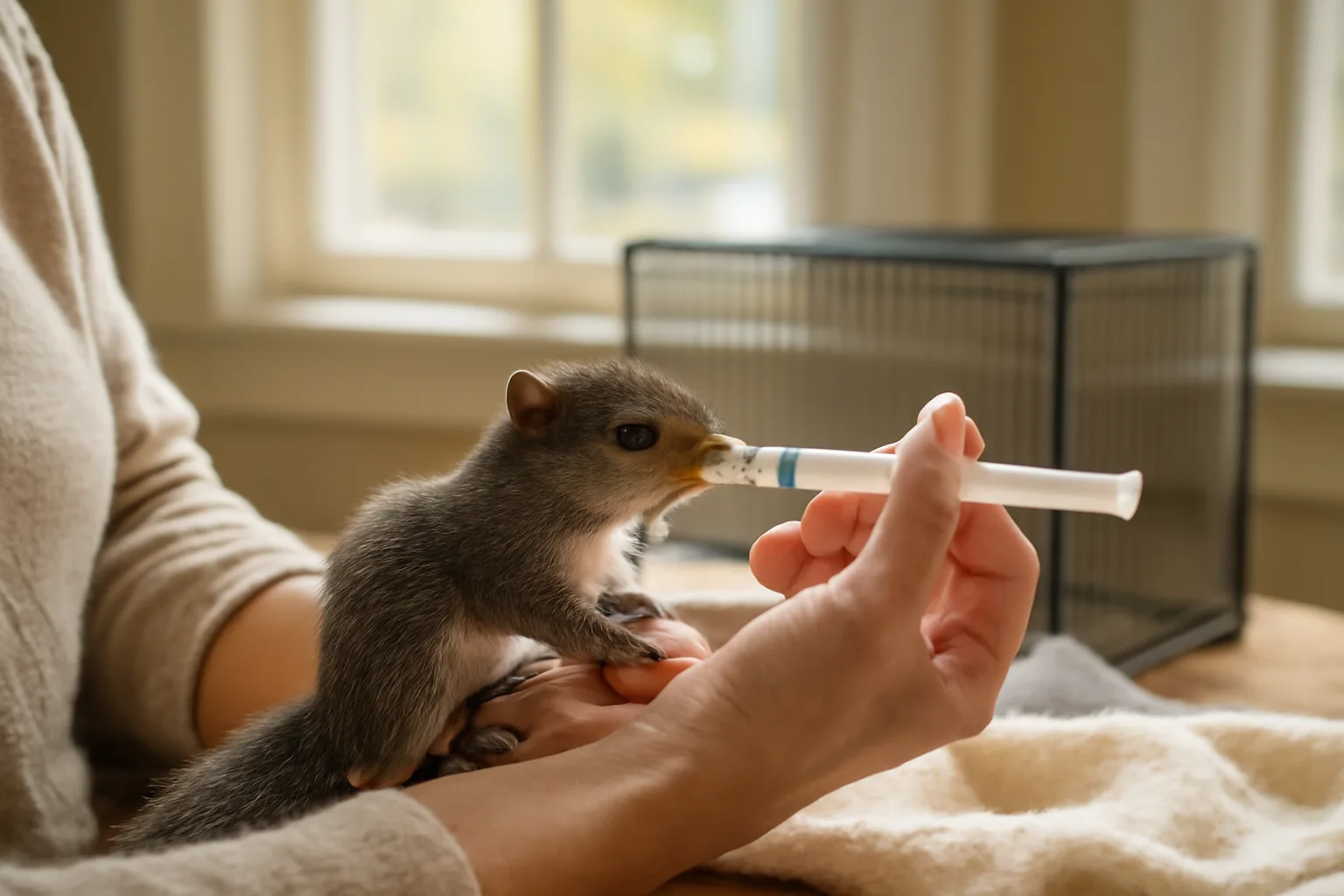
Here's the one thing you can do without a permit: transport an injured animal directly to a licensed rehabilitator. That's it. Any feeding, housing, or hands-on care crosses the line into possession, and possession needs the permit.
The state sorts species into groups: small mammals, raptors, songbirds, reptiles and amphibians, and rabies-vector species (bats, skunks, raccoons). Each group can need its own authorization. A general permit covers certain species. High-risk animals need extra endorsements on top of it.
Which agency handles wildlife rehabilitator licensing in Connecticut?
The Connecticut Department of Energy and Environmental Protection (DEEP), Wildlife Division, runs the whole thing. It gives the exam, processes applications, and inspects facilities. The office is in Hartford, and DEEP keeps a Wildlife Rehabilitator Permit page with forms, study materials, and contact info [6].
The rules that govern all of this live in Title 26, Chapter 66 of the Regulations of Connecticut State Agencies [2]. Those regulations cover everything from fees to cage dimensions. When there's a dispute about what's required, the regulation text wins, not what someone told you on the phone.
DEEP staff are helpful in my experience. They will not bend on sponsorship or inspection rules.
What are the basic qualifications for a Connecticut wildlife rehabilitator license?
You have to be at least 18 and either a Connecticut resident or run your main place of business in the state [2]. You can't have a wildlife-related conviction that led to a suspended or revoked license [4]. Past those gates, three things matter most:
- A passing score of 80% on the DEEP wildlife rehabilitator exam [7].
- A signed sponsorship agreement from a permitted Connecticut rehabilitator who has at least three years of experience and will supervise you for a minimum of two years and 400 hours of hands-on work [4].
- A facility that meets the physical standards in the regulations [9].
No college degree required. No veterinary license required. Plenty of rehabbers come out of zookeeping, vet tech work, or years of volunteer shifts. The 400-hour supervised requirement, though, is fixed. DEEP wants proof you've done the work before you go solo.
How much does a wildlife rehabilitator license cost in Connecticut?
State fees run $80 total, and they're spelled out in regulation §26-66-3 [3]. Here's the breakdown:
- Written exam fee: $40, nonrefundable [3].
- Permit application fee: $40, nonrefundable [3].
That's the state side. If your application gets denied, that money is gone. The permit is good for five years, and renewal costs $40 every five years [3].
One add-on catches people. If you want to rehabilitate migratory birds (songbirds, waterfowl, raptors), you also need a federal Migratory Bird Rehabilitation permit from the U.S. Fish and Wildlife Service. It costs $100 and runs on a completely separate track from the state process [8]. Almost every native bird you'll encounter is migratory, so most bird rehabbers pay it.
Now the real money. Rabies vaccine shots and titer tests run roughly $300 to $500 out of pocket if you handle rabies-vector species. Liability insurance is optional but many rehabbers pay $200 to $400 a year for it. Enclosures are the big one, and they can climb into the thousands.
The chart below shows the mandatory state and federal permit fees for your first year.
How long does it take to get a Connecticut wildlife rehabilitator license?
At least two years, and that floor is set by the sponsorship rule, not by paperwork speed. You can't fill out a form and wait a few weeks. Here's how the timeline actually breaks down:
1. Exam readiness: Study the DEEP guide [7] and take the exam. It's offered a few times a year, so you might wait a month or two for the next date. Once you pass, the score is valid for two years [4]. 2. Find a sponsor: This is the hard part. Connecticut has only around 80 to 100 permitted rehabbers, and not all of them take subpermittees. You may volunteer for months before someone signs on. The clock on your hours starts once they do. 3. Supervised experience: DEEP requires 400 hours of hands-on rehabilitation over at least two calendar years under that sponsor [4]. You cannot compress it. The regulation sets "a minimum of two years," full stop. 4. Inspection and application: After the hours are done, you submit the application with your sponsor's sign-off, pay the $40, and schedule a facility inspection. DEEP aims to process complete applications in about 6 to 8 weeks [6].
Count on at least two years plus one to two months of final processing from your first volunteer day to the day your permit shows up. If you've already been logging hours under a rehabber before you decide to apply, you'll hit the hours sooner. The two-year floor still holds.
What exam do I need to pass?
A closed-book written exam, given by DEEP at designated sites, passing score 80%. It covers Connecticut wildlife laws and regulations, species identification, basic first aid, nutrition, caging, and release criteria [7].
The DEEP Wildlife Rehabilitator Study Guide is your main text [7]. It's a free download, runs about 150 pages, and packs in sample questions, native species lists, and the full regulation text. Read it twice. Make flashcards. Some people also work through "Principles of Wildlife Rehabilitation," but the DEEP exam tracks the guide closely, so start there.
Fail it and you can retake after 30 days. There's no cap on attempts, but each retry costs another $40 [3]. Pass it once and you're done. The permit doesn't require a recertification exam down the road.
Sponsorship requirement: the two-year ride-along
Connecticut's sponsorship rule is one of the strictest anywhere. Under §26-66-4, a sponsor has to [4]:
- Hold a valid Connecticut wildlife rehabilitator permit for at least three years right before your application.
- Be in good standing with no unresolved violations.
- Agree to train and supervise you for at least 400 hours of hands-on rehabilitation over at least two years [4].
Out-of-state rehabbers and veterinarians can't sponsor you unless they hold a current CT permit. The regulation also requires in-person supervision for the first 100 hours, after which the sponsor can guide you by phone or video.
Log every hour. DEEP can ask for a signed logbook, and the 400 hours have to be real work: feeding, cleaning, medical care. Watching doesn't count. You also need hours with the species group you plan to permit for. Songbird hours don't qualify you for mammals.
One thing I'd do: line up more than one sponsor if you can. Some rehabbers split birds and small mammals. More references make for a stronger application.
Facility and enclosure requirements
The regulations set minimum cage sizes, construction materials, and sanitation standards, and your facility gets inspected before any permit is issued [9]. The points that trip people up:
- Indoor caging must be non-porous, easy to disinfect, and escape-proof.
- Outdoor pre-release enclosures need double doors or a vestibule to stop escapes.
- Sick and quarantine animals have to be separated from healthy ones.
- Size floors matter: a squirrel needs at least a 4 ft x 4 ft x 4 ft indoor cage, and a raptor flight cage might run 8 ft wide by 10 ft long.
Enclosures are usually the biggest startup cost. New rehabbers often spend $2,000 to $5,000 on materials and construction. If you're handy, PVC framing and hardware cloth cut the bill. Good plans prevent expensive do-overs. WildlifeRehabPath's State + USFWS Enclosure Kit ($149, one-time) includes dimensioned plans built to Connecticut's rules for common species, which saves weeks of design work and wasted lumber.
DEEP looks for cleanliness, proper food storage, and adequate heating and cooling at inspection. They don't expect a sterile clinic. They do expect a safe, organized space.
Federal permits for migratory birds
Any native bird that migrates (nearly all songbirds, waterfowl, and raptors) needs a federal permit from the U.S. Fish and Wildlife Service. The Migratory Bird Rehabilitation permit costs $100 and runs separately from the state process [8]. You submit Form 3-200-10b, show evidence of your DEEP permit or pending application, and describe your facilities and experience. Processing averages 60 to 90 days.
Connecticut's rules don't override federal law, and they don't replace it either. You cannot legally hold a robin or a hawk without the USFWS permit, even with a state permit in hand. A federal permit without a state permit is just as useless. Budget for both.
Renewing your Connecticut wildlife rehabilitator permit
The permit lasts five years. To renew, you file a renewal application, pay the $40 fee, and document any continuing education you've done since your last renewal [3]. DEEP doesn't set an exact CE-hour number in the regulations, but the renewal form asks you to list workshops, conferences, or courses you've attended [10]. I'd aim for at least 10 hours over the five years to stay current.
You also have to report your annual intake numbers by species and outcome (released, died, transferred) to DEEP. Skipping annual reports is one of the top reasons permits get suspended.
Common missteps in the application process
The top reason applications stall is incomplete sponsor documentation. Confirm your sponsor's permit is current and that they've signed every form. Second, people underestimate the inspection. Schedule it only when your facility is truly finished. If DEEP finds problems, you fix them and reapply, and that adds months.
Another trap: applying before you've finished 400 hours. DEEP denies it and you lose the $40. Keep a log and apply only when you're sure the hours are there.
Last one people miss is the federal bird permit timing. If you're planning on birds, file your USFWS application alongside your state application. You can start the federal process once you've passed the exam and have a sponsor arrangement in place.
Moving to another state with a wildlife rehabilitator license
Every state writes its own rules, and your Connecticut permit won't transfer. What does carry over is the experience you logged under a sponsor. That reads as solid credentials anywhere you apply next. If you're relocating, start with the state-specific breakdowns (like our guides for Alabama or California). The federal migratory bird permit is national, so you update your address instead of reapplying. You'll still need the new state's own permit.
Frequently asked questions
Do you need a license for wildlife rehabilitator in connecticut?
Yes. Connecticut law requires a wildlife rehabilitator permit from DEEP before you can possess any wild animal for rehabilitation. No exception exists for temporary or one-time care. Unlicensed possession can bring fines [1]. The only legal move for an unlicensed person is transporting the animal straight to a permitted rehabilitator.
How much does wildlife rehabilitator cost in connecticut?
State fees total $80: $40 for the written exam and $40 for the permit application, both nonrefundable [3]. Handling migratory birds adds a $100 federal permit fee [8]. Enclosure construction, rabies vaccines, and liability insurance are extra out-of-pocket costs that can run into the thousands.
How long does wildlife rehabilitator take in connecticut?
You must complete at least 400 hours of supervised hands-on rehabilitation over a minimum of two calendar years under a sponsor [4]. After that, expect 6 to 8 weeks for DEEP processing. The total timeline from starting as a subpermittee is at least two years plus about two months.
Can I rehab a squirrel I found without a permit?
No. You need a DEEP permit. The only legal option for an unlicensed person is transporting the squirrel directly to a permitted rehabilitator. Caring for it yourself, even briefly, counts as illegal possession and can bring fines [1].
Is there a fee waiver for nonprofit wildlife rehabilitators?
DEEP does not offer fee waivers for nonprofits. Every applicant pays the $40 exam fee and $40 permit fee regardless of organizational status [3]. A 501(c)(3) designation can still help with fundraising for enclosures and other operational costs.
What is the hardest part of getting licensed in Connecticut?
Finding a qualified sponsor. Connecticut has around 80 to 100 permitted rehabbers, and not all take subpermittees. You may volunteer for months before securing one who meets the three-year experience requirement and will commit to two years of supervision [4].
Do I need a separate permit for rabies-vector species?
Yes. To handle bats, skunks, or raccoons, you need special authorization from DEEP and proof of current rabies pre-exposure vaccination. The general permit does not automatically cover rabies-vector species, so plan for the extra endorsement and the vaccine cost.
Can I take the exam before finding a sponsor?
Yes. Passing the exam is a prerequisite, and your score stays valid for two years [4]. Many applicants take the exam first, then hunt for a sponsor while the score is still active. It's a smart order that keeps you from wasting the two-year window.
What counts toward the 400 hours of experience?
Direct hands-on animal care: feeding, cleaning enclosures, giving medications, physical therapy, and similar work. Passive observation doesn't count. DEEP may ask for a signed logbook during application review, so track every hour with the species group you plan to permit for [4].
How often is the exam offered in Connecticut?
DEEP typically schedules the exam two to four times per year. Contact the Wildlife Division directly for upcoming dates [6]. Testing sites are usually at DEEP headquarters in Hartford or regional offices. Because dates are limited, plan your study timeline around the next available sitting.
Does Connecticut require liability insurance for wildlife rehabbers?
No, but it's strongly recommended. Homeowner's insurance usually excludes wildlife rehabilitation activities. Many rehabbers buy a separate commercial or animal bailee policy for a few hundred dollars a year, roughly $200 to $400, to cover bites, escapes, and property claims.
What happens if I fail the facility inspection?
DEEP lists the deficiencies. You correct them and request a re-inspection. There may be an added fee, so it's cheaper to prepare thoroughly the first time. Have quarantine separation, escape-proof caging, and proper food storage ready before you schedule the visit.
Sources
- Regulations of Connecticut State Agencies, Title 26, Chapter 66: Full wildlife rehabilitator regulations.
- Conn. Agencies Regs. § 26-66-3: Exam fee $40, permit fee $40, renewal fee $40, all nonrefundable.
- Conn. Agencies Regs. § 26-66-4: Sponsorship requirements: 400 hours, two years, sponsor must have three years’ experience.
- DEEP Wildlife Rehabilitator Permit Application form: Application form with fee and sponsorship certification blocks.
- DEEP Wildlife Rehabilitator Permit main page: Overview of permit process; processing time approximately 6 to 8 weeks.
- DEEP Wildlife Rehabilitator Study Guide: Exam content, closed-book, passing score 80%.
- Conn. Agencies Regs. § 26-66-5: Facility and enclosure minimum standards.
- DEEP Wildlife Rehabilitator Permit Renewal Application: Renewal form requests documentation of continuing education.